
In an era of unprecedented regulatory complexity and heightened stakeholder expectations, governance risk & compliance services have evolved from back-office functions into strategic business enablers. Organizations across industries are discovering that robust GRC frameworks don’t just prevent penalties—they create competitive advantages, build stakeholder trust, and drive sustainable growth.
Understanding the GRC Landscape
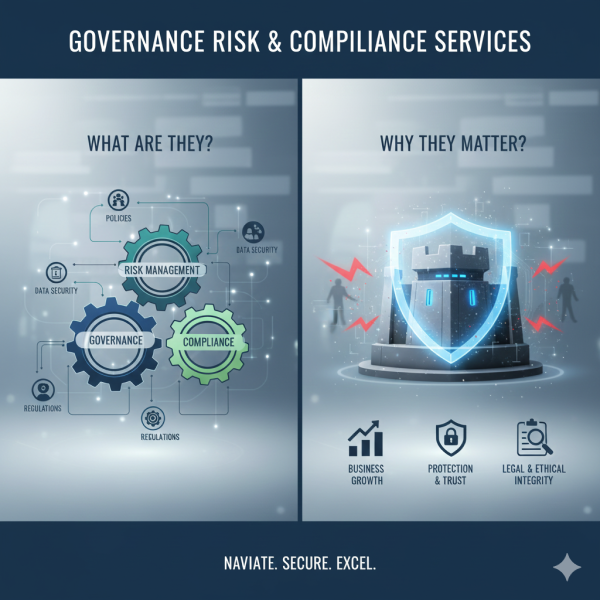
Governance, risk, and compliance represent three interconnected pillars that form the foundation of organizational integrity. Governance establishes the structures and processes for decision-making and accountability. Risk management identifies and mitigates threats to organizational objectives. Compliance ensures adherence to laws, regulations, and internal policies.
The convergence of these disciplines creates a comprehensive approach to organizational resilience. Modern businesses face an expanding web of regulatory requirements spanning data privacy, financial reporting, cybersecurity, environmental standards, and industry-specific mandates. Navigating this complexity requires specialized expertise and systematic frameworks.
The Business Case for Professional GRC Services
Many organizations underestimate the true cost of compliance failures. Beyond regulatory fines and legal fees, compliance breaches damage reputation, erode customer trust, and disrupt operations. The 2024 regulatory landscape shows enforcement agencies taking increasingly aggressive stances, with penalties reaching unprecedented levels across sectors.
Professional governance risk & compliance services provide organizations with the expertise, tools, and methodologies to transform compliance from a cost center into a value driver. Specialized GRC partners bring cross-industry insights, regulatory intelligence, and proven frameworks that internal teams may lack the bandwidth or expertise to develop independently.
Key Components of Comprehensive GRC Services
Governance Framework Development
Effective governance starts with clear accountability structures, defined roles and responsibilities, and transparent decision-making processes. Professional GRC advisors help organizations design board and committee structures, establish governance policies, and implement oversight mechanisms that align with best practices and regulatory expectations.
Risk Assessment and Management
Comprehensive risk management goes beyond compliance risk to encompass operational, strategic, financial, and reputational threats. GRC services providers conduct enterprise-wide risk assessments, develop risk registers, establish risk appetite frameworks, and implement monitoring systems that provide real-time visibility into emerging threats.
Regulatory Compliance Programs
Navigating the regulatory landscape requires constant vigilance and specialized knowledge. Professional compliance services help organizations interpret evolving regulations, assess applicability, implement required controls, and maintain documentation that demonstrates compliance to regulators and auditors.
Internal Controls and Audit Support
Strong internal controls form the backbone of compliance programs. GRC experts design control frameworks, conduct control testing, identify gaps, and support remediation efforts. They also prepare organizations for external audits and regulatory examinations, reducing the stress and disruption these events often create.
Policy and Procedure Development
Clear, actionable policies and procedures translate regulatory requirements into operational reality. Professional GRC services include developing comprehensive policy frameworks, creating user-friendly procedures, and establishing review cycles that keep documentation current as regulations evolve.
Training and Awareness Programs
Compliance depends on employees understanding their responsibilities and making sound decisions in complex situations. Effective GRC programs include tailored training initiatives, awareness campaigns, and knowledge management systems that embed compliance into organizational culture.
Industry-Specific GRC Considerations
Different industries face unique compliance challenges that require specialized expertise. Financial services organizations navigate securities regulations, anti-money laundering requirements, and consumer protection laws. Healthcare providers manage HIPAA privacy rules, billing compliance, and quality standards. Manufacturing companies address environmental regulations, workplace safety, and supply chain compliance.
Professional GRC service providers bring industry-specific knowledge that generic consultants cannot match. They understand sector-specific regulations, enforcement trends, and best practices that have proven effective in similar organizations. This specialization accelerates implementation and reduces the risk of costly missteps.
Technology’s Role in Modern GRC
The complexity of modern compliance demands has made technology integration essential. GRC platforms centralize risk data, automate compliance workflows, provide audit trails, and generate reports that satisfy regulatory requirements. However, technology alone cannot solve GRC challenges—it must be implemented strategically within a comprehensive framework.
Leading GRC service providers help organizations select appropriate technology solutions, configure them to organizational needs, integrate them with existing systems, and train users to maximize value. They also ensure technology implementations support rather than complicate compliance efforts.
Selecting the Right GRC Services Partner
Choosing a GRC services provider requires careful evaluation of several critical factors. Look for firms with demonstrated expertise in your industry, proven methodologies, strong references, and a collaborative approach. The best providers act as strategic partners rather than mere vendors, investing time to understand your unique challenges and tailoring solutions accordingly.
Firms like Gaudet and Associates exemplify the strategic partnership approach, offering comprehensive governance risk & compliance services that address the full spectrum of organizational needs. Their expertise spans multiple industries and regulatory domains, enabling them to provide integrated solutions rather than point solutions that create silos.
Building a Sustainable GRC Program
Effective governance risk & compliance programs evolve continuously to address emerging threats and changing regulations. One-time assessments or compliance projects rarely deliver lasting value. Organizations need ongoing support that includes regulatory monitoring, periodic risk reassessments, control testing, and program optimization.
Professional GRC services providers offer various engagement models to support sustained compliance excellence. Whether through retained advisory relationships, project-based initiatives, or specialized support during regulatory examinations, these partnerships ensure organizations maintain compliance momentum rather than allowing programs to atrophy between crises.
Measuring GRC Program Effectiveness
Demonstrating the value of governance risk & compliance investments requires clear metrics and reporting frameworks. Effective programs track key risk indicators, control effectiveness, audit findings, regulatory citations, and incident trends. They also measure program maturity against industry benchmarks and regulatory expectations.
Professional GRC advisors help organizations develop meaningful metrics that satisfy both board oversight requirements and operational management needs. They create dashboards and reports that communicate program status clearly to diverse stakeholders, from frontline managers to board directors.
The Future of Governance Risk & Compliance
The GRC landscape continues evolving rapidly. Emerging technologies like artificial intelligence and blockchain create new compliance challenges while offering potential solutions. Environmental, social, and governance considerations increasingly influence investor decisions and regulatory priorities. Cybersecurity threats grow more sophisticated, demanding continuous adaptation.
Organizations that view GRC as a strategic capability rather than a necessary burden position themselves for success in this dynamic environment. They recognize that strong governance, proactive risk management, and embedded compliance create competitive advantages that defensive, reactive approaches cannot match.
Taking Action
Organizations at any stage of GRC maturity can benefit from professional services that bring specialized expertise, proven methodologies, and objective perspectives. Whether you’re building your first compliance program, addressing regulatory findings, preparing for increased oversight, or optimizing existing frameworks, expert guidance accelerates progress and reduces risk.
The investment in comprehensive governance risk & compliance services delivers returns through reduced regulatory exposure, enhanced operational efficiency, stronger stakeholder confidence, and sustainable competitive positioning. In today’s complex regulatory environment, professional GRC support has transitioned from optional to essential for organizations committed to long-term success.